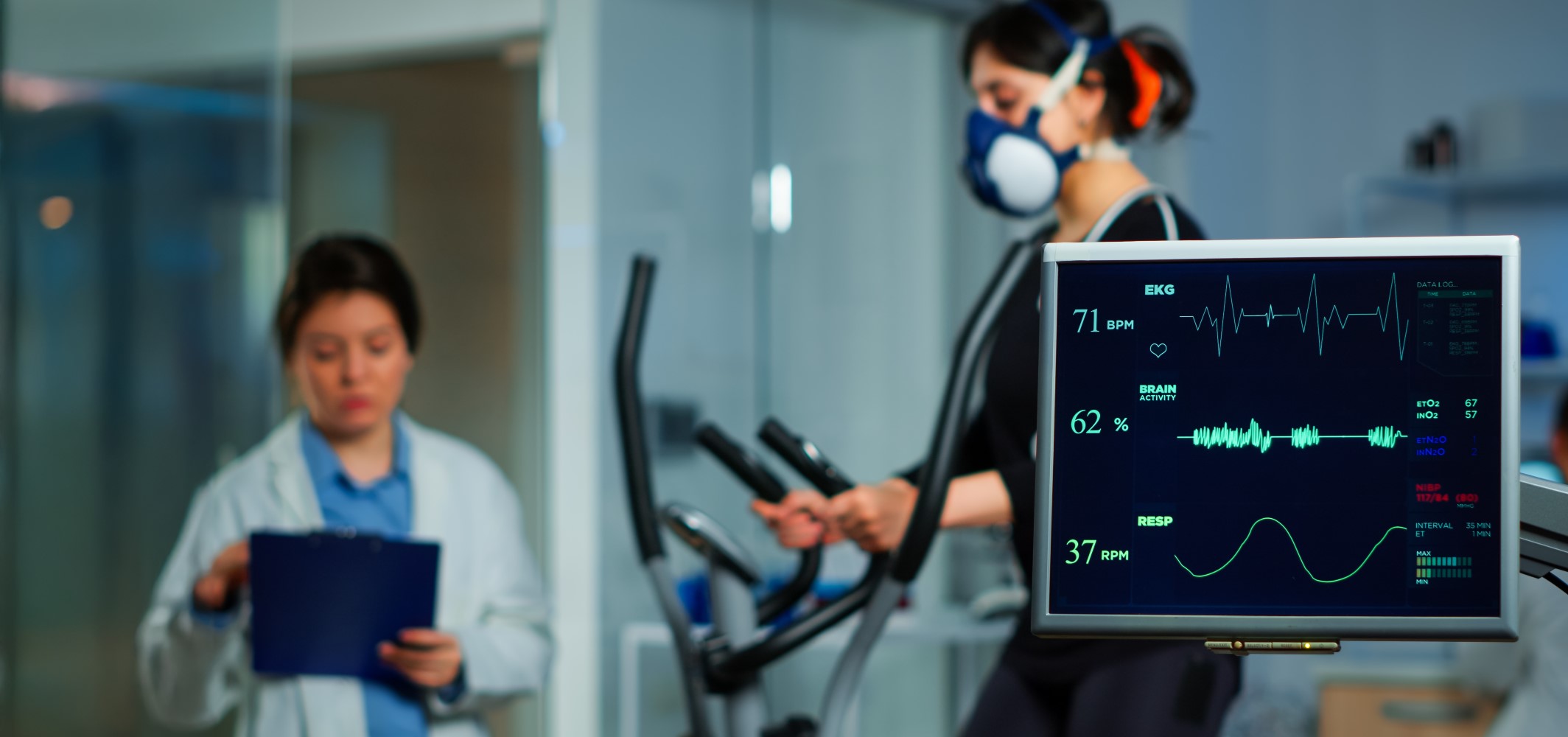
Exercise & Sports Science Banner Image

Exercise and Sports Science

Degree Type
Graduate
Total Requirements
30 Credit Hours
Areas of Concentration
Strength and Conditioning
Modality
Online

100% Online Starting Fall 2026

Become a high-impact strength and conditioning professional prepared to elevate athletic performance, prevent injury, and lead evidence-based training programs for athletes, tactical personnel, and active populations.

Our fully online Master of Science in Exercise and Sports Science with an emphasis in Strength and Conditioning is designed for working professionals who want to advance their careers while balancing school, coaching, and life commitments.

Program Highlights

The MS in Exercise and Sports Science prepares students to design, implement, and evaluate advanced strength and conditioning programs grounded in biomechanics, exercise physiology, data analytics, and performance science.

Developed through collaboration with regional athletic programs, healthcare partners, and national performance organizations, this program fills a critical workforce need in South Carolina and beyond.

Graduates will be positioned for career advancement across collegiate athletics, private training facilities, tactical performance programs, rehabilitation settings, and sports performance centers.

Program Objectives

Students gain the advanced scientific and coaching skills required to design effective, safe, and sport-specific strength and conditioning programs.

  • Application of biomechanics, exercise physiology, and motor learning to real-world coaching scenarios
  • Ability to create training programs that improve strength, power, speed, endurance, and movement quality
  • Skills to work with athletes, tactical personnel, youth, aging adults, and diverse populations
  • Emphasis on movement analysis, force production, load management, and performance optimization
  • Integration of program periodization, progressive overload, and sport-specific demands

Graduates learn to coach with precision, using science to guide every decision they make.

Students develop strong analytical abilities to interpret research, use data effectively, and apply evidence-based insights in the strength and conditioning field.

  • Training in research methods, performance testing, and scientific evaluation
  • Ability to analyze sport performance data, including wearable tech, GPS metrics, force plates, and monitoring tools
  • Skills to interpret training loads, adaptation curves, injury trends, and athlete readiness data
  • Experience applying peer-reviewed research to practical coaching decisions and program improvements
  • Competency in evaluating validity, reliability, and efficacy of training methodologies
  • Confidence using analytics to justify program design with evidence

Graduates leave prepared to make informed, data-supported decisions that enhance athlete outcomes.

The program builds the knowledge, practical skills, and professional readiness required to advance in high-performance environments and earn industry-recognized credentials.

  • Comprehensive preparation for the NSCA Certified Strength & Conditioning Specialist (CSCS®) exam
  • Development of leadership skills needed in collegiate, professional, tactical, and private S&C settings
  • Emphasis on effective communication, ethical decision-making, and professional conduct
  • Ability to collaborate with coaches, athletic trainers, physical therapists, sport psychologists, and interdisciplinary support teams
  • Training in program administration, mentorship, and team leadership roles
  • Development of professional portfolios, practicum experience, and hands-on coaching evaluations

Graduates are equipped not just to take the CSCS® exam — but to excel as leaders in performance, strength, and athletic development.

Course Highlights

The sports science degree curriculum includes courses in exercise physiology, strength and conditioning, sports performance and movement analysis, and advanced nutrition to give you the skills and knowledge to become a professional in your chosen area. Classes include, but are not limited to:

  • Advanced Exercise Physiology
  • Program Design for Strength and Conditioning
  • Biomechanics and Movement Analysis
  • Injury Management for Strength and Conditioning
  • Advanced Nutrition for Athletic Performance

Delivered in Five Accelerated Terms

Fall Term IA

  • EXSC A523 – Advanced Exercise Physiology (3)
  • EXSC A558 – Research Methods in Strength & Conditioning (3)

Fall Term IB

  • EXSC A526 – Principles of Strength & Conditioning (3)
  • EXSC A508 – Data Analytics in Sports Performance (3)

Spring Term IA

  • EXSC A527 – Program Design for Strength & Conditioning (3)
  • EXSC A521 – Biomechanics & Movement Analysis (3)

Spring Term IB

  • EXSC A525 – Injury Management for Strength & Conditioning (3)
  • EXSC A511 – Advanced Nutrition for Athletic Performance (3)

Summer Term

  • EXSC A537 – Mental Health & Sport Performance (3)
  • EXSC A596 – Strength & Conditioning Practicum (3)
Program Contact
Chair and Associate Professor

What can you do with a Masters in Exercise and Sports Science?

Learning Outcomes

Students completing the MS in Exercise & Sports Science will be able to apply advanced scientific concepts to improve strength, power, speed, endurance, and movement quality. Design individualized and sport-specific training programs. Conduct performance testing and use analytics to monitor athlete adaptation. Identify injury risks and implement prevention and recovery strategies. Demonstrate professionalism and effective communication within performance teams.

Practicum Experience

Students complete a 100-hour supervised practicum at an approved site with a CSCS-certified supervisor, in alignment with NSCA ERP standards. Example practicum includes USC Aiken Athletics, other regional universities, local high schools, and private performance centers.

Why Choose USCA?

Take courses from anywhere, on your schedule. The Masters in Exercise and Sports Science is built for coaches, trainers, educators, and working professionals who need flexibility without sacrificing academic rigor.

  • Fully online delivery — no campus visits required
  • Accelerated 7–8 week terms so you can focus on two courses at a time
  • Ideal for full-time coaches, strength professionals, PE teachers, and tactical trainers
  • Evening and asynchronous components designed around real-world coaching schedules
  • Ability to apply what you learn immediately with athletes, clients, or teams

This structure allows professionals to advance their career while maintaining work, family, and training commitments.

USCA’s curriculum directly supports preparation for the Certified Strength & Conditioning Specialist (CSCS®) credential — widely recognized as the gold standard in the profession from the National Strength and Conditioning Association (NSCA).

  • Coursework maps to NSCA Education Recognition Program (ERP) standards
  • Faculty include CSCS-credentialed instructors and experienced strength coaches
  • Exam-relevant content includes biomechanics, physiology, program design, and research methods
  • Practicum must be supervised by a CSCS professional, strengthening exam readiness
  • Graduates complete the program academically prepared to take the CSCS® exam immediately

This master's program blends advanced science, coaching application, and performance analytics to build high-level expertise.

  • Courses developed from industry input, faculty expertise, and national standards
  • Integration of biomechanics, applied exercise physiology, and movement analysis
  • Modern topics: performance data tracking, wearable tech, force profiling, load management
  • Injury prevention + return-to-play principles built into coursework
  • Mental health, athlete well-being, and psychological performance included in training
  • Nutrition, recovery science, and performance fueling strategies embedded across the curriculum

Students graduate with the knowledge to coach, design programs, analyze data, and improve athletic performance using the latest scientific evidence.

Strength & conditioning is a rapidly growing field, with expanding opportunities in athletics, fitness, tactical performance, and rehab-based settings.

  • National job growth projected at 9–13% — faster than average
  • South Carolina median salary: $56,460; national median: $45,910
  • Increasing demand in high schools, colleges, sports academies, and private facilities
  • Rising need for S&C professionals who understand analytics, injury prevention, and performance science
  • Growth of tactical S&C for military, police, and fire departments
  • Expansion of Masters-level requirements for collegiate S&C positions

This program positions graduates to step into high-demand roles with advanced qualifications.

USCA's location provides strong connections to regional athletics, healthcare systems, and sport-performance organizations.

  • Practicum opportunities with USCA Athletics and other local colleges and universities
  • Strong relationships with area high schools and competitive athletic programs
  • Access to private performance centers for youth, adult, tactical, and masters athletes
  • Opportunities at CrossFit affiliates, weightlifting clubs, and performance labs
  • Collaboration with sports medicine, athletic training, and rehabilitation teams
  • Ability to complete practicum anywhere in the U.S. with a CSCS-credentialed supervisor

These partnerships help students gain hands-on experience, build a professional network, and transition into strength and conditioning careers with confidence.

The program is built to meet the academic standards of the National Strength & Conditioning Association (NSCA), ensuring students develop the scientific and practical knowledge needed for the Certified Strength & Conditioning Specialist (CSCS®) exam.

  • Curriculum follows NSCA Education Recognition Program (ERP) guidelines
  • Includes all major CSCS domains: exercise physiology, biomechanics, program design, research methods, nutrition, injury prevention, and sport psychology
  • Taught by CSCS-credentialed faculty and experienced strength coaches
  • Practicum must be supervised by a CSCS professional, reinforcing exam readiness
  • Graduates complete the program academically prepared to sit for the CSCS® exam